Motion Capture Insights into Archery Adjustments for Wind During Olympic Qualification Events
Written by Iris Long · Sep 16, 2026
Motion Capture Insights into Archery Adjustments for Wind During Olympic Qualification Events
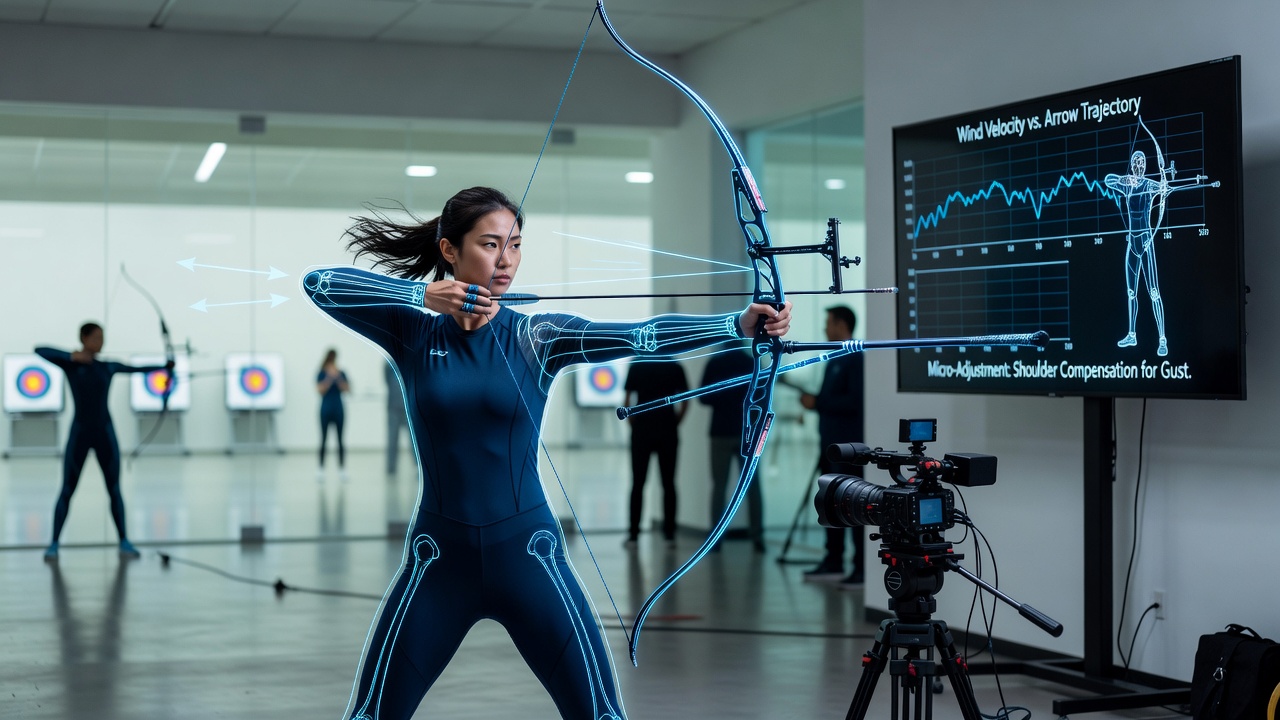
Archery competitions at Olympic qualification rounds rely on precise technique analysis, and motion capture systems have become standard tools for examining how athletes respond to environmental factors such as wind. These systems track joint positions, bow angles, and arrow trajectories at high frame rates, allowing researchers to identify small corrections that archers make during aiming and release phases. Data collected from events scheduled through September 2026 shows consistent patterns in how competitors adjust for crosswinds and gusts that vary across different ranges.
Technology Setup in Qualification Venues
Multiple high-resolution cameras positioned around the shooting lanes capture three-dimensional movements while inertial sensors attached to the bow and archer's body record acceleration data. Software then reconstructs the full sequence of each shot, highlighting deviations as small as 0.5 degrees in bow tilt or 2 millimeters in draw length. Observers note that these recordings integrate with wind speed measurements from anemometers placed at intervals along the 70-meter distance used in recurve events.
Studies conducted by the Australian Institute of Sport demonstrate that motion capture reveals timing differences in shoulder stabilization when wind speeds exceed 3 meters per second. The data indicates archers often shift their center of mass slightly backward within 200 milliseconds before release to counteract torque from side gusts. Such adjustments remain invisible to the naked eye yet appear clearly in the overlaid kinematic models.
Patterns Identified in Wind Compensation
Analysis of qualification round footage reveals that elite archers execute micro-adjustments primarily through subtle elbow rotations and finger pressure variations on the string. These changes occur in sequences lasting under 150 milliseconds, and motion capture quantifies their effect on arrow flight paths. Figures from World Archery events show that successful shots in moderate wind conditions correlate with a 1.8-degree average increase in bow cant angle compared to calm conditions.
Researchers at institutions across Europe have compiled datasets from multiple qualification sessions, finding that archers from different nations display distinct compensation styles. One group tends to increase draw weight slightly, while another group favors a forward lean adjustment in the upper body. Both approaches produce comparable accuracy when executed consistently, according to aggregated trajectory statistics.
Application During September 2026 Rounds
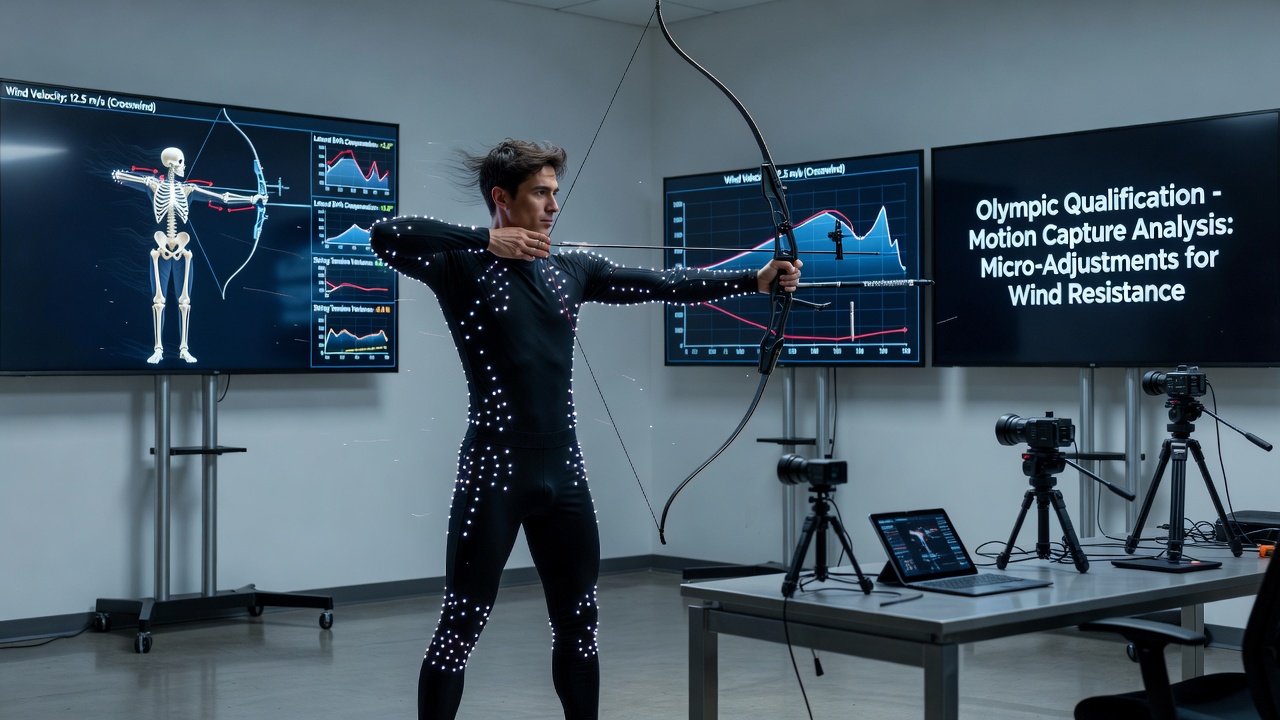
Qualification events planned for September 2026 will incorporate updated motion capture protocols that synchronize with real-time weather feeds. Technical staff will process recordings within hours of each session, providing coaches with visualizations that map wind influence against individual shot outcomes. This approach builds on earlier implementations used at continental championships, where teams identified repeatable error patterns tied to specific wind directions.
Archery federations have established guidelines requiring standardized sensor placement to ensure comparable data across venues. The protocols specify camera angles at 45-degree increments and minimum sampling rates of 240 frames per second. Compliance with these standards allows direct comparison of micro-adjustment data from different qualification sites.
Training Implications from Captured Data
Coaching programs now integrate motion capture feedback into daily practice routines. Athletes review their recorded sequences alongside wind vector overlays, practicing the exact timing of shoulder and wrist corrections observed in successful qualification shots. Longitudinal tracking shows measurable reductions in shot dispersion after several weeks of targeted drills based on these recordings.
National training centers in North America and Asia have adopted similar workflows, adapting the core methods to local wind patterns and equipment variations. The resulting databases contribute to broader research on biomechanical efficiency under variable outdoor conditions.
Conclusion
Motion capture continues to expand understanding of how archers manage wind resistance through precise, repeatable adjustments during Olympic qualification rounds. The technology supplies objective measurements that support both performance analysis and equipment refinement. As events approach in 2026, ongoing data collection will further refine these insights across international competition circuits.